
Categories
- Articles

- Blogs and Op-eds
- News
- Quora Questions and More
Related Products
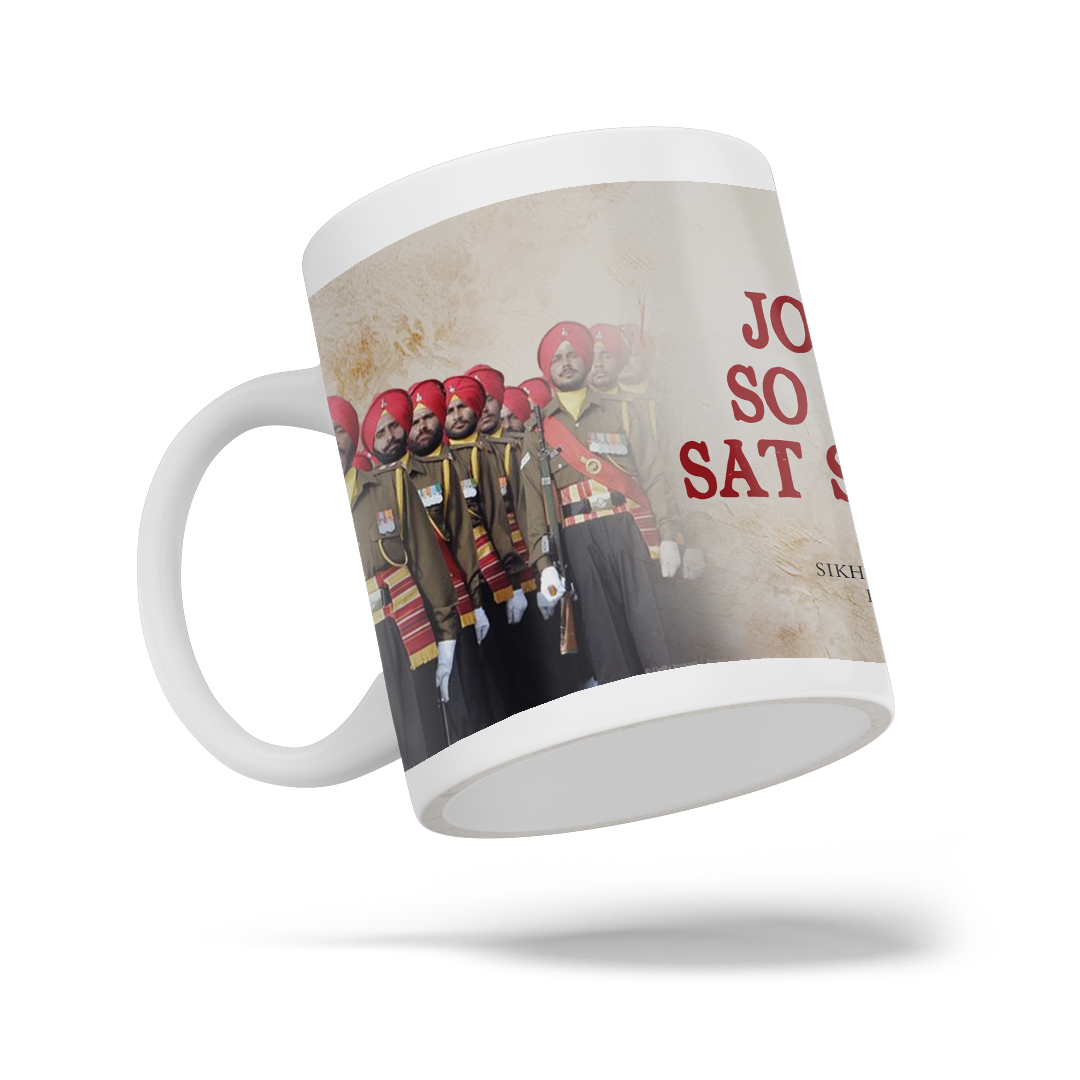
Sikh Light Infantry Mug

Related Books
From Boots to Brotherhood: Cadets, Camaraderie and Chronicles
Ever Wondered Why the Army Avoids the Word ‘Martyr’ or 'Shaheed'? Here’s Why
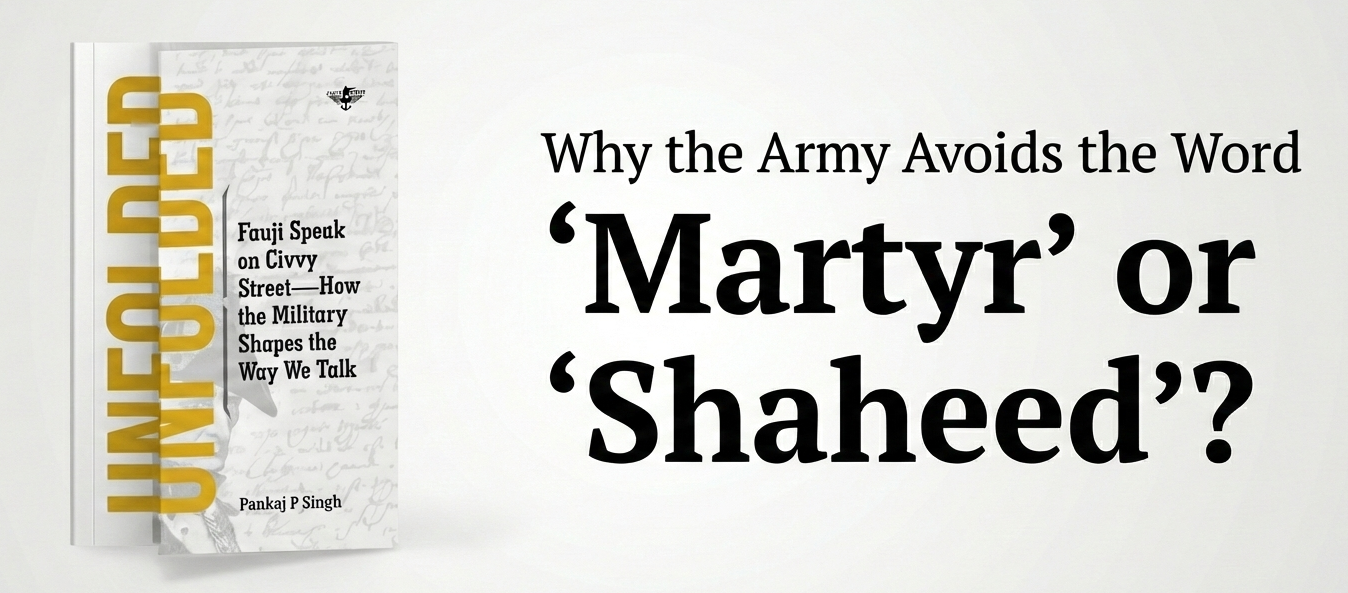 Word ‘Martyr’ or 'Shaheed'
Language often enters our lives quietly. We inherit words from headlines, conversations, and long-standing habits, rarely stopping to question their origins or meanings. Over time, they begin to feel universal—even when they aren’t. Military vocabulary is a powerful example of this quiet crossover.
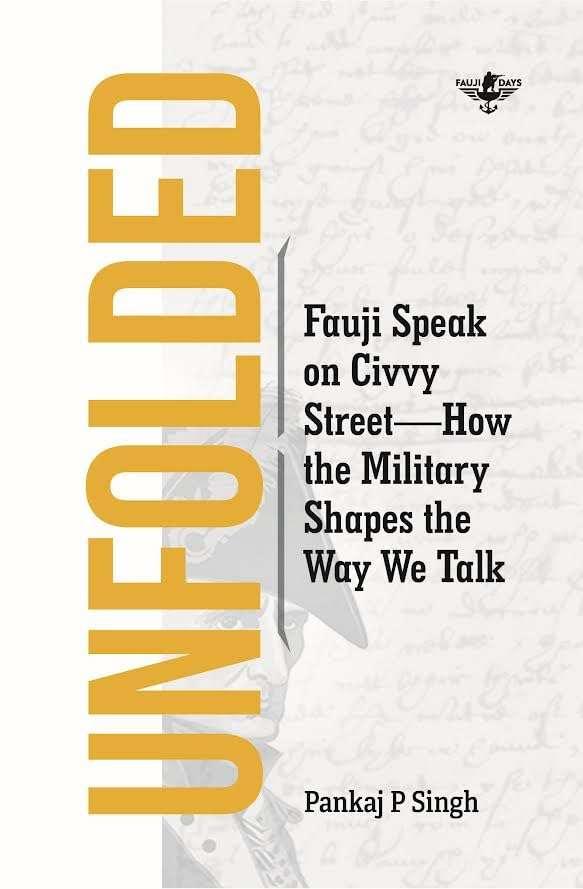
Fauji lingo has steadily moved from the barracks to civilian streets, shaping how we speak, think, and even perceive the armed forces. Many of us use these terms casually, unaware of the precision and intent with which they were originally crafted. Pankaj P Singh explores this fascinating linguistic exchange in UNFOLDED: Fauji Speak on Civvy Street, which he traces how military words, phrases, and culture have seeped into everyday civilian life.
https://hq.faujidays.com//media/original_images/51-cITmNfPL.jpg
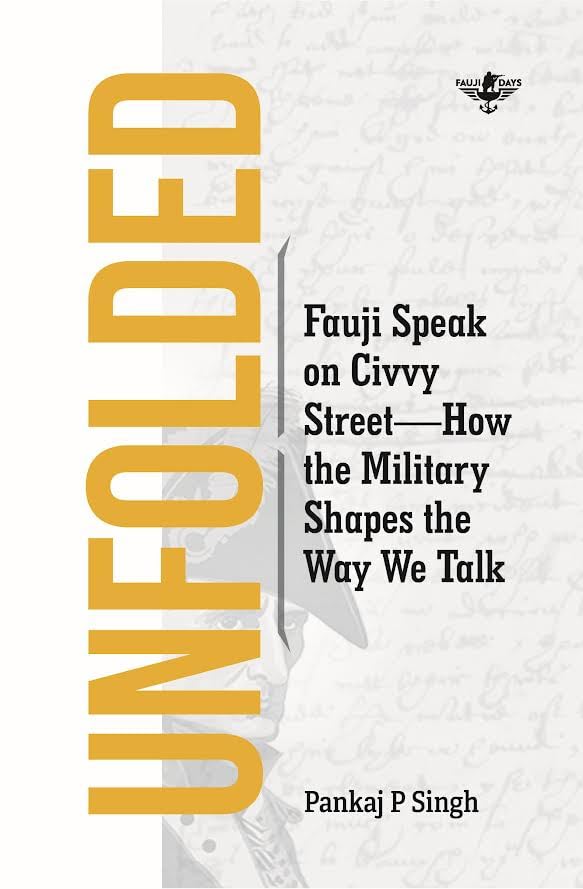
One such word is “martyr”—or “shaheed.” Widely used by the media and the general public for soldiers killed in action, it comes as a surprise that the Army itself doesn’t use these terms. Why does the military make this choice? And how did these words become so deeply rooted in our vocabulary? This blog explores the answers.
Also read: Exclusive Excerpt from Unfolded: Fauji Speak on Civvy Street
How the Armed Forces Honour Their Fallen
In news reports and public discourse, fallen soldiers are almost instinctively referred to as ‘shaheed’ or ‘martyr.’ However, this widely used vocabulary does not reflect the official language of the Indian military. In fact, did you know the Indian Armed Forces consciously avoid these terms?
Both the Ministry of Defence and the Ministry of Home Affairs have clarified—through Parliament responses, and RTI replies—that the terms ‘martyr’ and ‘shaheed’ are not formally defined or used by the Armed Forces or the Central Armed Police Forces (CAPFs).
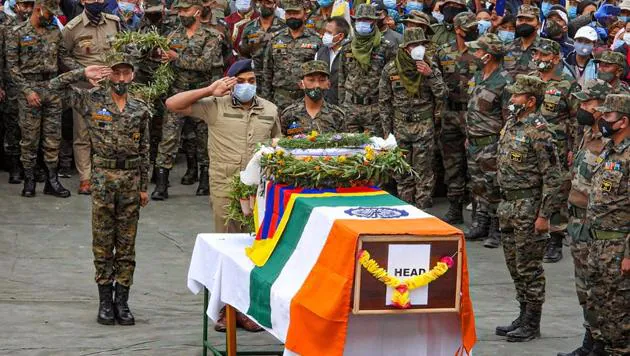 [Image Credit: Hindustan Times]
Instead, the military relies on precise, protocol-driven terminology such as ‘battle casualty,’ ‘operations casualty,’ or ‘killed in action.’ In ceremonial and official communication, phrases like ‘laid down their lives,’ ‘made the supreme sacrifice for the nation,’ and ‘fallen heroes’ are preferred. In Hindi, ‘veergati prapt’—meaning attaining a valorous death—is considered both official and respectful.
From Frontlines to the Front Page: How Media Narratives Reframe Military Language
Once we understand how the military formally honours its fallen, a natural question follows: why are the words “shaheed” and “martyr” so dominant in civilian discourse? The answer lies in the power of media narratives.
Across television debates, newspaper reports, and digital headlines, shaheed and martyr are routinely used to describe soldiers, paramilitary personnel, and police officers who die in the line of duty. Media language is shaped less by institutional protocol and more by public sentiment. For the civilians, these words have come to symbolise noble sacrifice. Their emotional weight makes them instantly relatable—and widely accepted.
This creates a clear divergence between official military communication and media storytelling. While the armed forces rely on precise, duty-focused terminology, no mechanism obliges the media to follow suit. As a result, emotionally charged civilian language continues to shape how sacrifice in uniform is understood beyond the front lines.
How the Fauji World Lives On in Civilian Speech
Military language has quietly embedded itself into everyday civilian life, often stripped of its original context yet retaining its emotional force. Words born on battlefields now thrive in newsrooms, boardrooms, political debates, and social media.
A siege once meant a city cut off and starved; today, politicians, celebrities, and even towns are said to be ‘under siege,’ the term repurposed to convey pressure and scrutiny. The frontline is no longer limited to soldiers—it now describes hospital wards during COVID, classrooms in conflict zones, or activists battling online hostility. During the pandemic, healthcare workers were called ‘frontline warriors,’ turning a health crisis into a war narrative that helped the public grasp an invisible enemy.
If you are interested in this fascinating crossover of fauji and civilian linguistics, grab yourself a copy of UNFOLDED: Fauji Speak on Civvy Street today!
Buy here: UNFOLDED: Fauji Speak on Civvy Street
Your next read: From Boots to Trench Coats: Military Fashion Trends That Went Mainstream
Related blogs
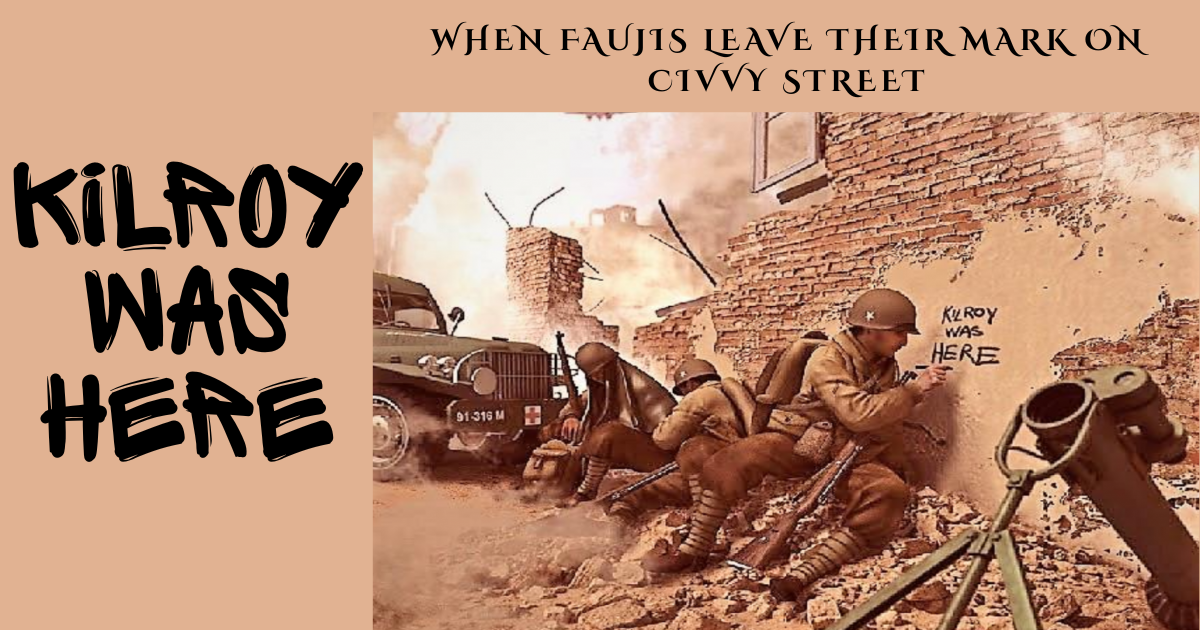
Kilroy Was Here: When Faujis Leave Their Mark on Civvy Street
Exclusive Excerpt from Unfolded: Fauji Speak on Civvy Street

From Boots to Trench Coats: Military Fashion Trends That Went Mainstream