
Categories


Shakespeare and the Soldier’s Tongue: Military Phrases We Still Use Today
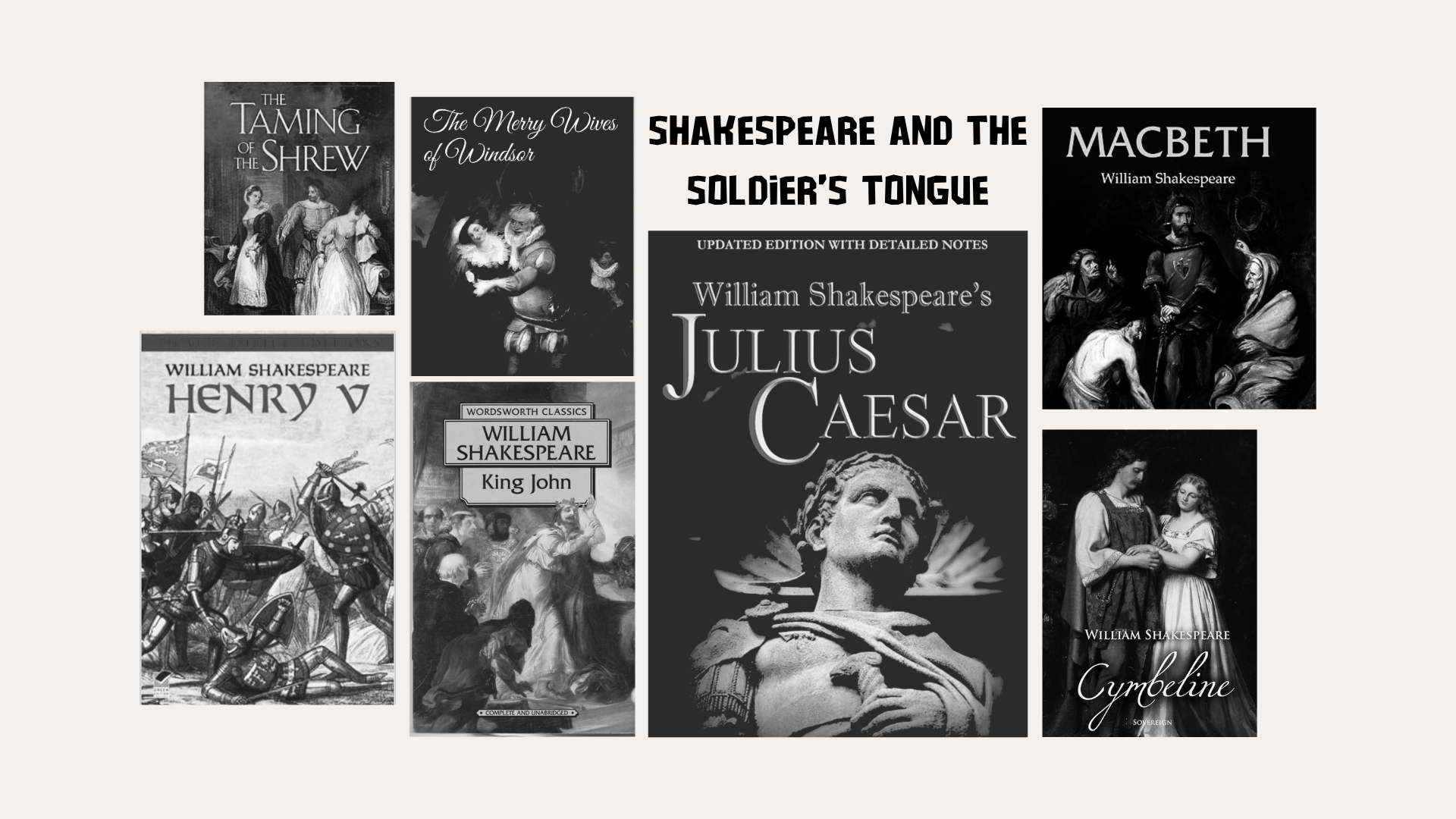 Military Phrases We Still Use Today
Shakespeare never wore a uniform, never marched in formation, and never heard the thundering roar of muskets—but he understood the rhythms, anxieties, and bravado of military life better than most. His England was a country of shifting alliances, frequent threats of invasion, and a culture steeped in tales of heroism. Naturally, some of the most vivid language in his plays comes straight from the soldier’s world.
What’s remarkable is that many of Shakespeare’s military expressions have stepped out of the battlefield and into our civilian vocabulary. We use them casually today—on Zoom calls, in schools, even while planning dinner—without realising the words once sat on the lips of kings, generals, and doomed commanders on Shakespeare’s stage.
Also read: In the Shadows of War: Shakespeare and Company's Brave Stance Against the Nazis
'Once more unto the breach'—Henry V
Perhaps one of the most famous lines in all of Shakespeare, this cry from Henry V still rings loud in the modern world. The phrase originally refers to soldiers charging once again into a literal gap in the fortress walls at Harfleur:

Today, civilians use it playfully whenever we have to tackle something repetitive or exhausting—another meeting, another Monday morning, another round of chores. Without knowing it, we’re echoing a king preparing his army for the brutal chaos of close-quarters combat.
'The world’s my oyster'—The Merry Wives of Windsor
Most of us use this phrase to express confidence or the belief that opportunities are everywhere. Shakespeare gave it a much sharper edge. In The Merry Wives of Windsor, Pistol uses the line to imply the world can be opened—by force—much like a soldier cracking open an oyster with a sword:
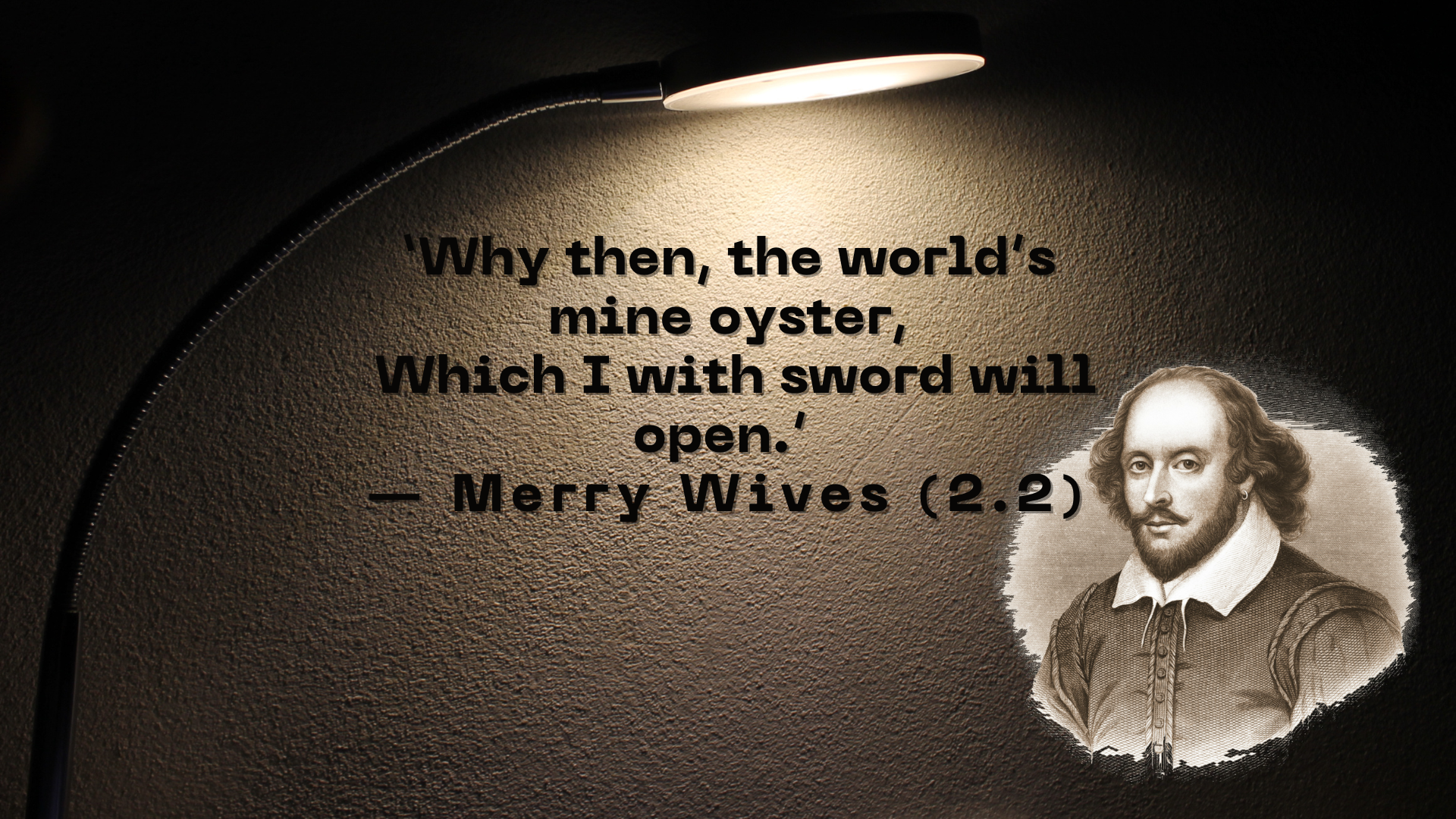
A line born out of threat and bravado now often accompanies Instagram captions and big-city ambitions. The soldier’s swagger has softened, but the spirit of daring remains.
'Fight fire with fire' (A Variation)—King John
While Shakespeare didn’t use the modern phrasing exactly, he wrote the conceptual ancestor in King John:
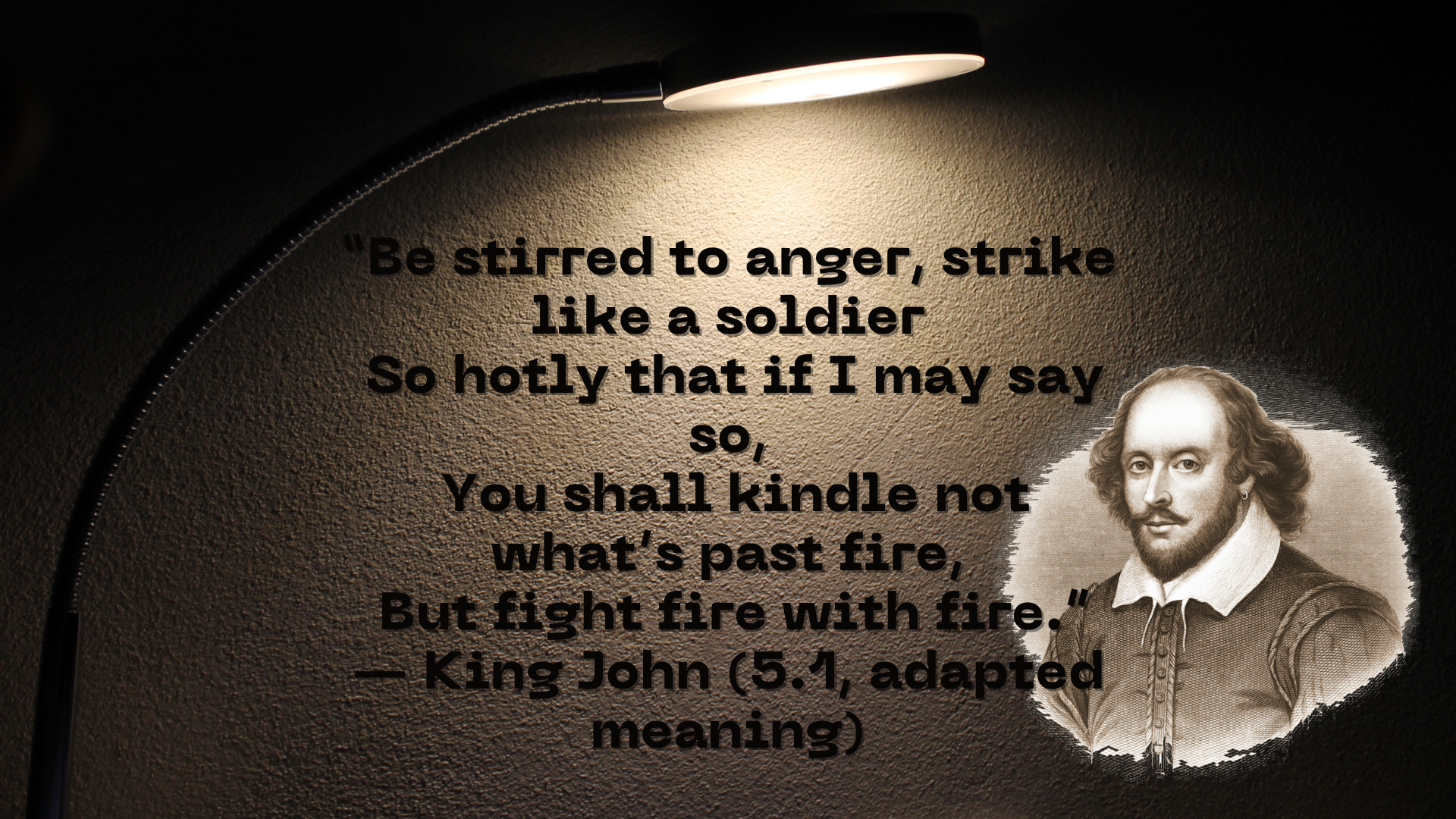
The notion—responding to an attack with equally aggressive force—became a staple English expression. Today, civilians use it to describe responding to competitive pressure, arguments, or even office politics with similar intensity.
'Stand on ceremony'—Julius Caesar
This is a phrase we use casually to mean observing formalities or making a fuss. In Julius Caesar, Calpurnia uses it to urge Caesar to pay attention to omens:
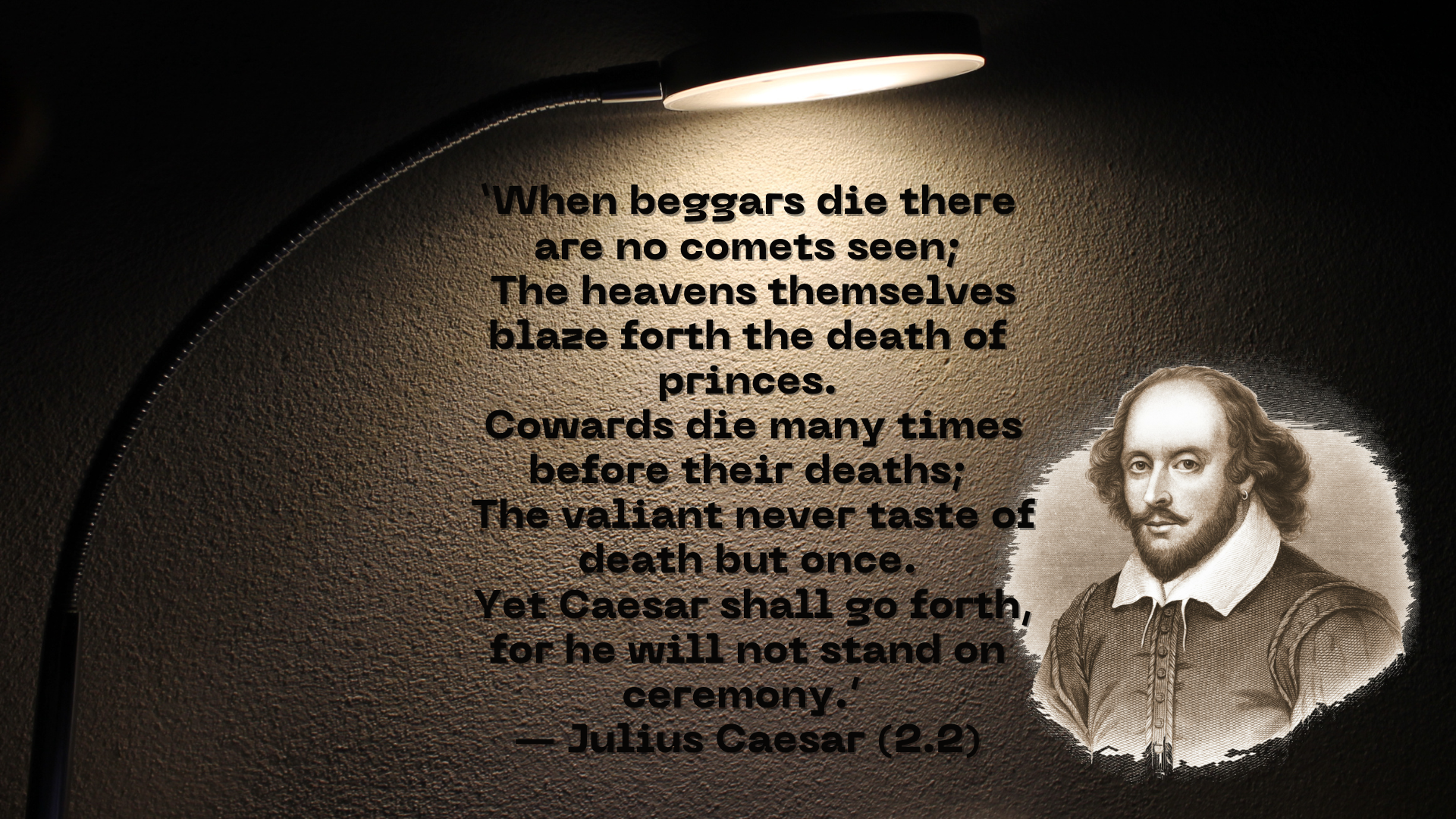
Today, we toss the phrase around to chide someone for being too formal or rigid—but Shakespeare used it to show Caesar’s fatal pride in ignoring warnings.
'Sound the alarm'—Used Across Several Plays
We still use ‘sound the alarm’ in everyday life whenever danger—literal or metaphorical—looms. Shakespeare used the phrase in its original military sense, calling soldiers to arms:
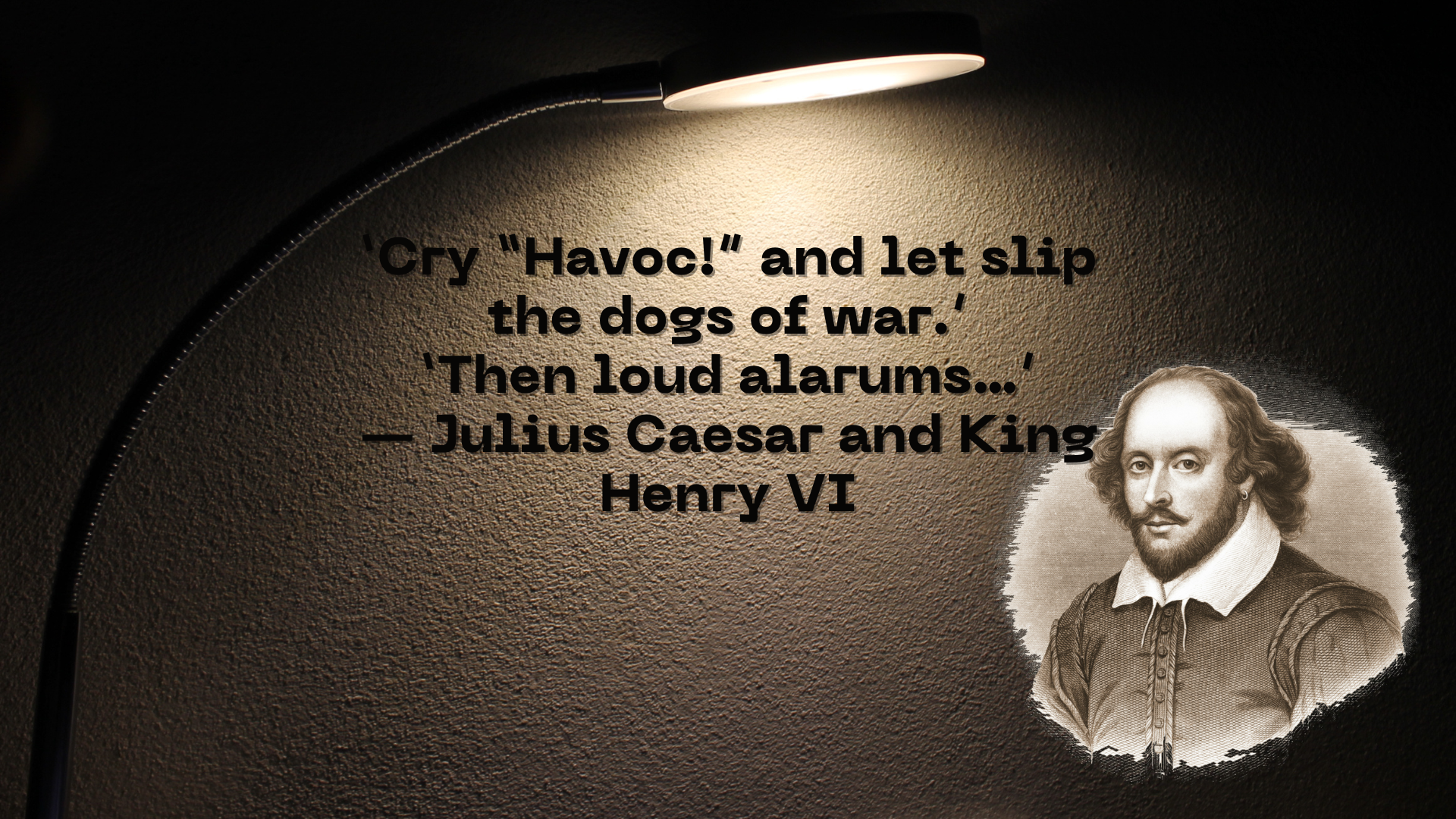
The word ‘alarum’ (a form of ‘alarm’) was stage direction meaning: Sound the call to battle.
Our modern fire alarms and phone alerts feel tame in comparison.
'Break the ice'—The Taming of the Shrew
This phrase is so relentlessly civilian that its military roots feel invisible. Shakespeare used it in The Taming of the Shrew to suggest taking the first step in a difficult encounter:
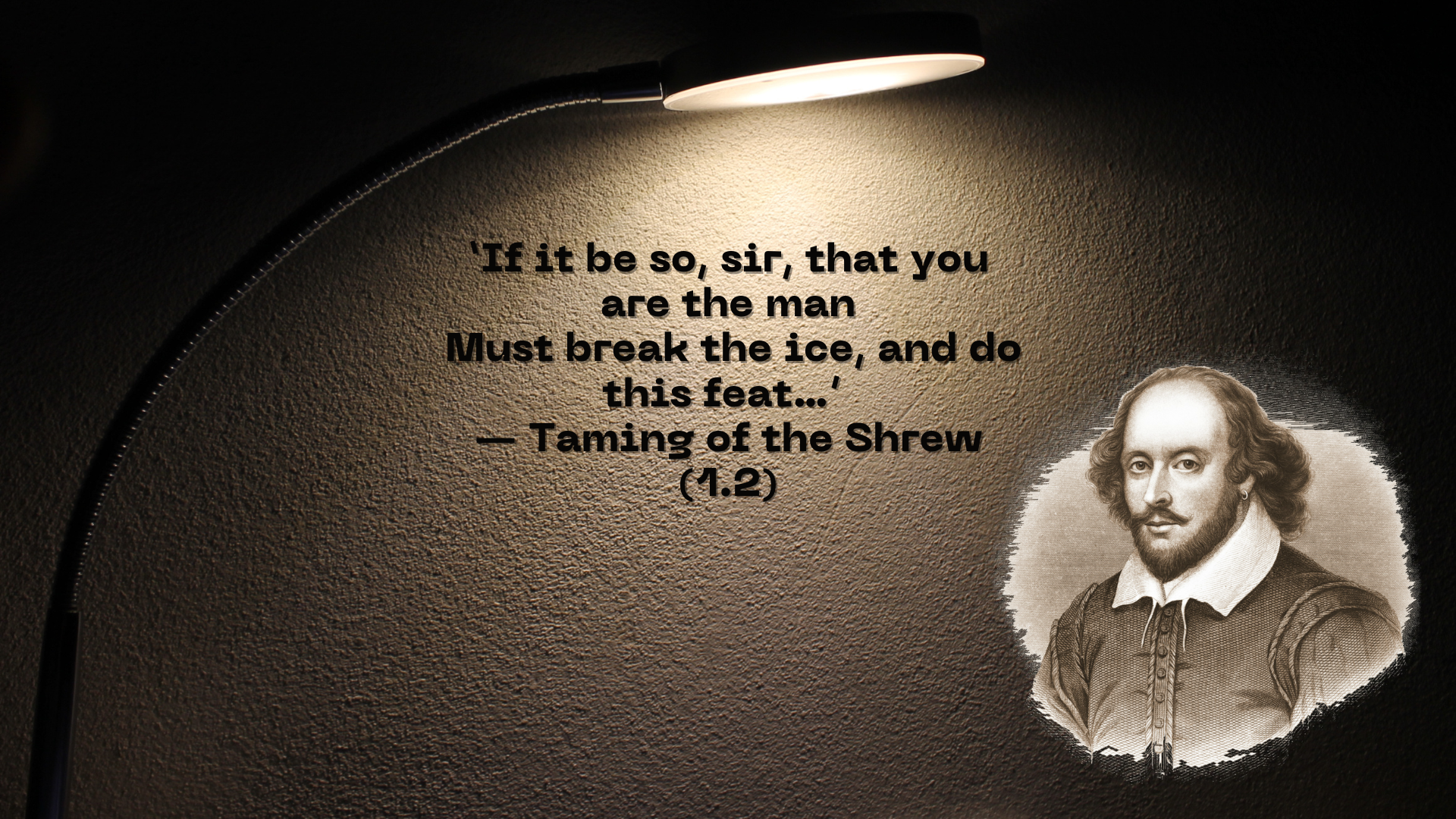
Originally referring to breaking through literal ice to advance, the military (and maritime) imagery reflected the effort needed to move forward. Now it describes awkward party introductions and first meetings.
'All’s fair in love and war' (Conceptual Origin)—Cymbeline
While Shakespeare didn’t write the exact modern phrase, Cymbeline contains the sentiment:
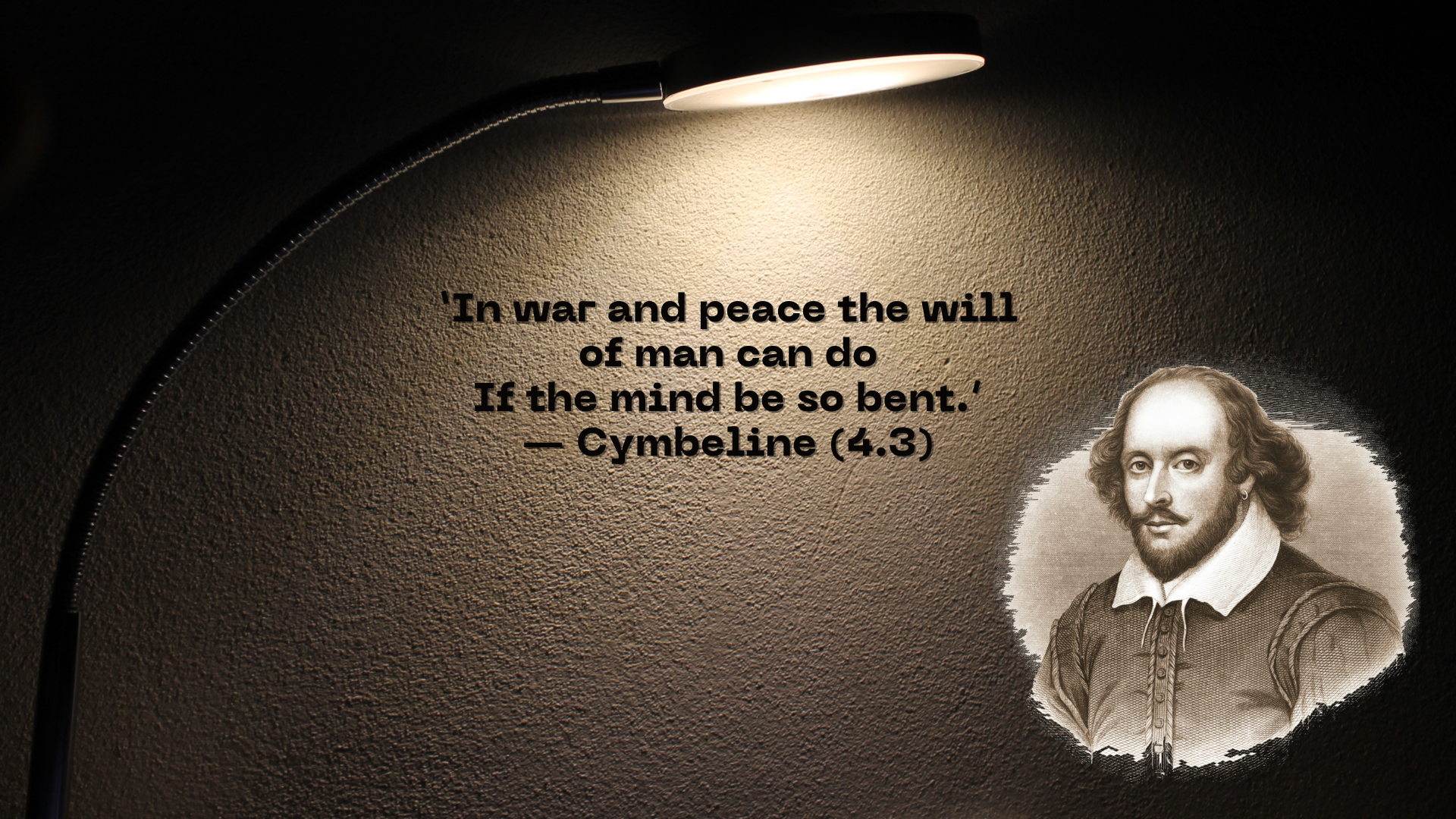
The idea that war suspends ordinary rules influenced the later proverb. Civilians now use it to justify everything from competitive flirting to office manoeuvring. Shakespeare planted the seed.
'At one fell swoop'—Macbeth
Today, we use this expression to describe doing many things at once. Shakespeare used it in Macbeth to describe a brutal mass killing:

‘Fell’ meant fierce or deadly. The line is heartbreaking—Macduff reacting to the slaughter of his family. Modern usage is far lighter, but the phrase still carries that sense of suddenness.
'The game is up'—Cymbeline
A phrase we use jokingly when a plan is foiled originally appeared in a far more serious moment:
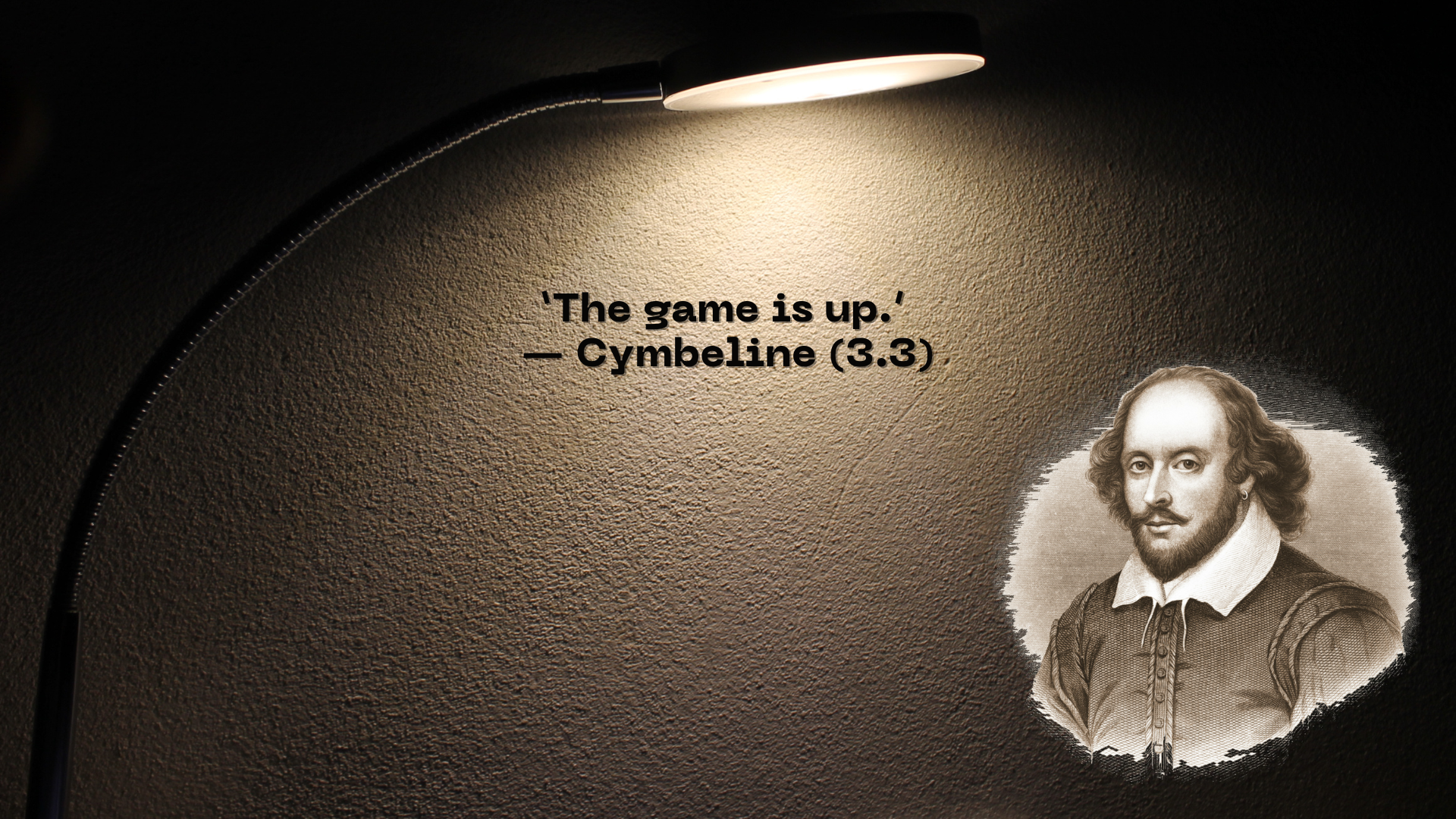
Shakespeare used it to signal exposure and danger—an enemy caught or a plot discovered. Civilians now use it when someone’s surprise party is spoiled or when secrecy falls apart.
The Civilian Afterlife of Soldier Phrases
Shakespeare didn’t invent military English, but he immortalised it. He gave soldierly expressions dramatic weight, emotional resonance, and unforgettable rhythm. Centuries later, we echo his lines—often unknowingly—every time we ‘break the ice’, declare ‘the game is up’, or push ourselves ‘once more unto the breach’.
His words remind us that even in civilian life, we’re all fighting small battles, navigating challenges, and mustering courage. The soldier’s tongue lives on because its metaphors still help us understand modern struggle.
And so, in the little wars of daily life, Shakespeare still commands the field.
Also read: “Roger That!”: How a Simple Word Became a Soldier’s Signature